What is natural wood veneer?
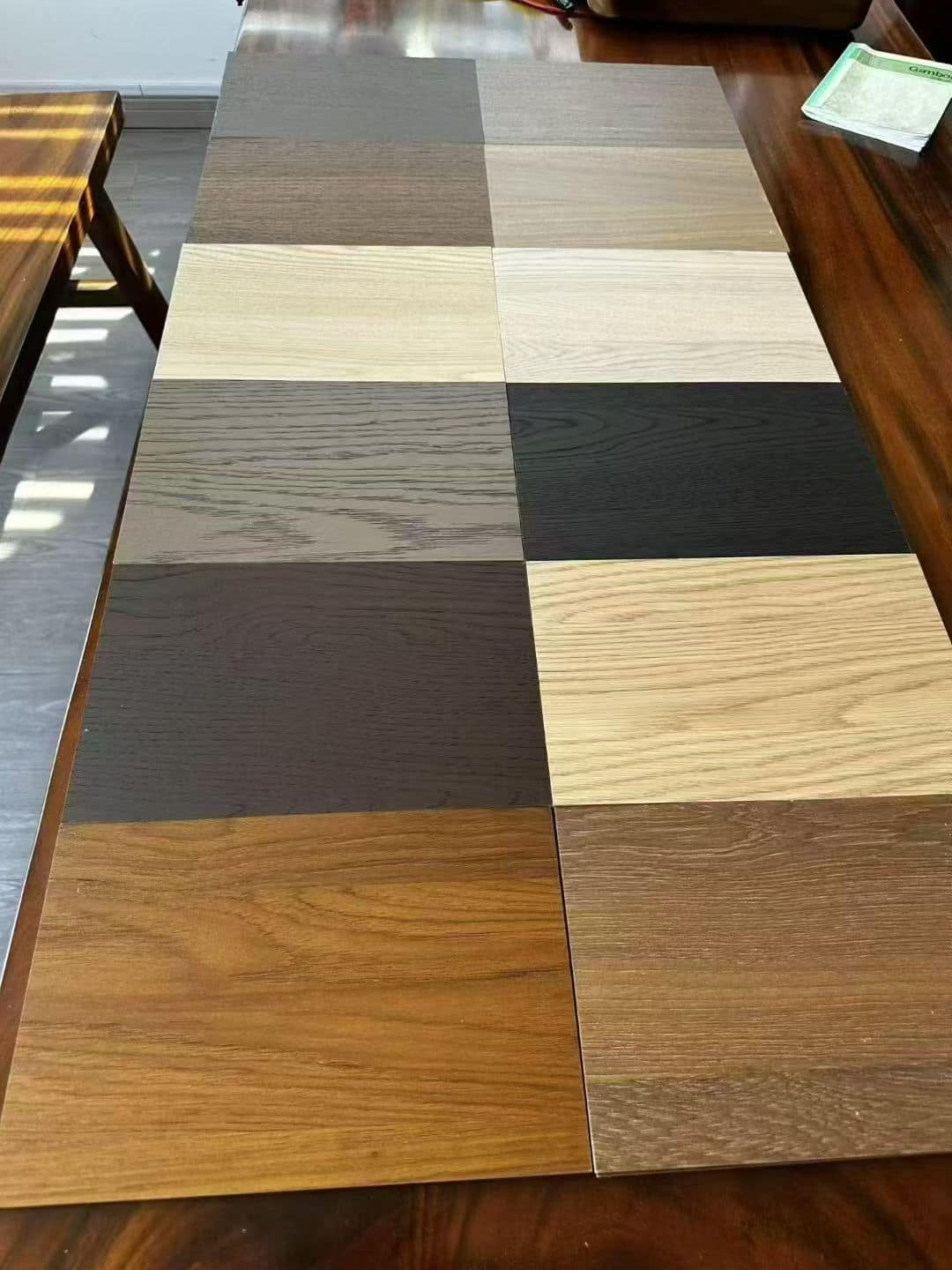
It is a real wood surface layer whose grain and tone reflect natural variation. Choose it when that individual wood character is part of the design intent. Review adjacent panels and grain direction before approval.
MATERIAL GUIDE
Natural veneer shows the individual variation of real wood; engineered veneer offers a more controlled visual pattern. Choose by the appearance and coordination your project needs.
DIRECT ANSWER
Natural wood veneer emphasizes the inherent variation of real wood. Engineered veneer is designed for a more controlled and repeatable visual pattern. Neither is automatically the better choice: select by the intended appearance, surfaces to coordinate, sample approval and project requirements.
FACTS & CONFIRMATION
BUYER COMPARISON
| Decision point | Natural wood veneer | Engineered veneer |
|---|---|---|
| Appearance | Individual real-wood grain character | More controlled visual pattern |
| Variation | Natural differences between veneer pieces | Greater repeatability, with batch review still needed |
| Sample approval | Review grain, tone and adjacent panels | Review target tone and planned batch |
| Project planning | Discuss grain direction and placement | Discuss surfaces that need a coordinated look |
| Applications | Wall panels, doors, cabinets and furniture fronts, subject to the chosen construction | |
| Customization | Confirm substrate, size, thickness, finishing and edge details for the selected product | |
It is a real wood surface layer whose grain and tone reflect natural variation. Choose it when that individual wood character is part of the design intent. Review adjacent panels and grain direction before approval.
It is a wood-veneer surface designed to make the visual pattern more controlled. Choose it when repeated appearance across multiple components matters. It still requires physical sample and batch review.
Novira discusses either surface on a specified multilayer solid wood construction for wall panels, door surfaces, cabinet fronts and furniture applications. Panel thickness, dimensions, finishing, edge details and matching profiles are confirmed for the selected product and project.
Request samples of both surface types in the intended tone. Compare them under project lighting, identify panels that will be viewed together, agree on grain direction and batch expectations, then confirm the construction and final specification before ordering.
BUYER QUESTIONS
This comparison does not establish that. Performance and environmental claims must be checked against the selected product and supporting documents.
No. It provides a more controlled visual direction, but sample and batch approval remain necessary.
Yes, either can be discussed for coordinated visible surfaces. Each component's construction and finishing must be confirmed separately.
NEXT STEP
Tell us your intended finish, application and surfaces to coordinate.
START YOUR REQUIREMENT
Include size, thickness, quantity, destination and any drawings or reference images.
Open inquiry form