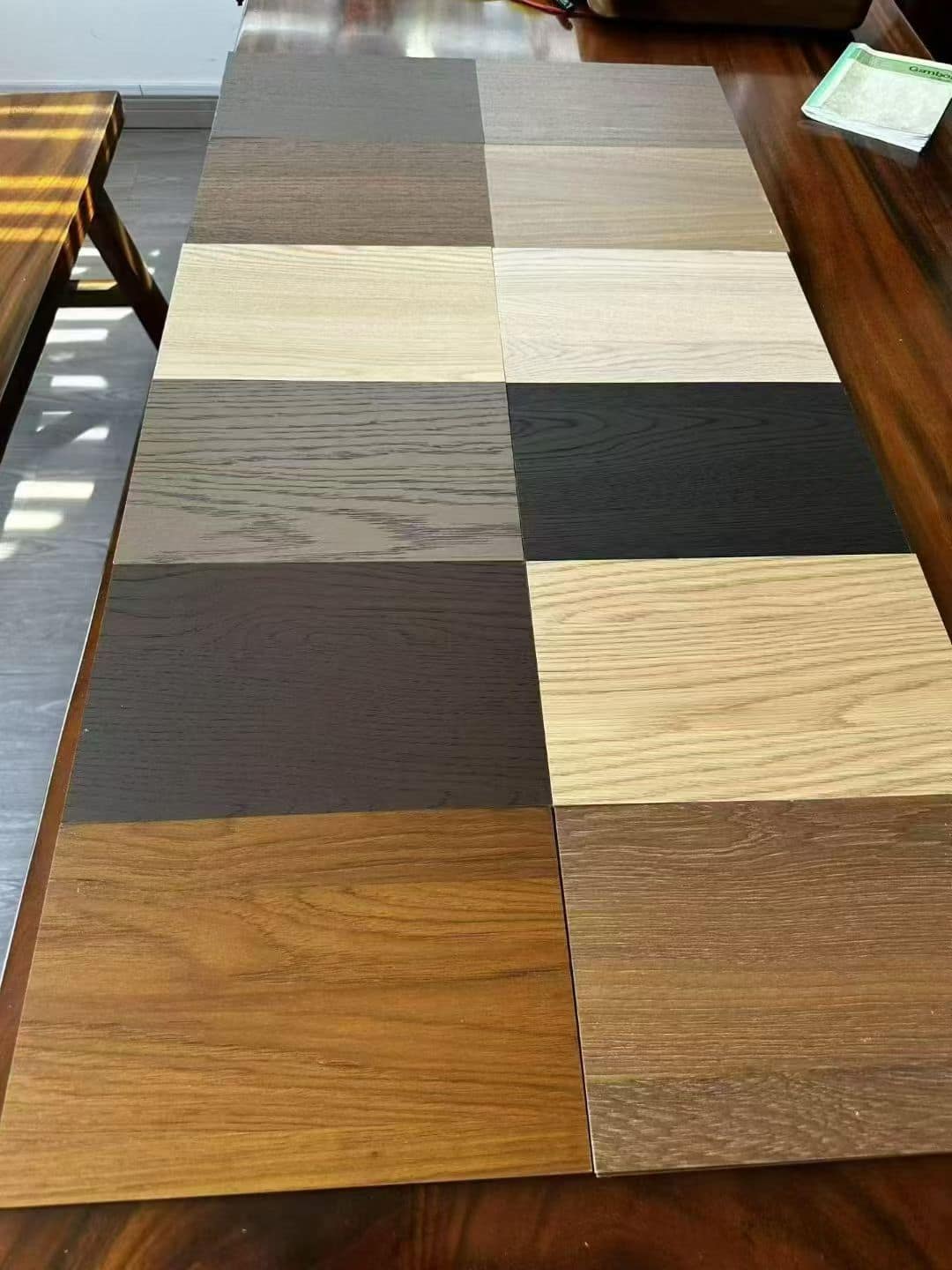
Verify what kind of supplier you are talking to, then lock a physical master sample, then put the substrate and configuration in the contract. A supplier who can discuss substrates, pressing and finish systems in detail — and who can produce the documents for the configuration you ordered — behaves differently from an intermediary who only relays prices. The checklist below is ordered by how expensive the mistake becomes if you skip it.
FACTS & CONFIRMATION
Separate confirmed facts from project options.
VERIFIED · Order of work
Supplier type first, then sample approval, then specification in the contract, then documentation, then logistics — in that order.
VERIFIED · Master sample
Every order should be produced against an approved physical master sample locked to that order, not against a catalogue reference.
PROJECT-SPECIFIC
Substrate, thickness, dimensions, finish, packaging, MOQ and payment structure are agreed per order and per destination market.
VERIFY BEFORE CONTRACT
Ask which documents accompany the configuration you are quoting, and get the sample procedure in writing before the first production run.
BUYER CHECKLIST
Six checks, in the order they cost you money.
Each check exists because skipping it produces a failure that appears later — usually at installation or at the border.
Check
What to ask
What a weak answer sounds like
1 · Supplier type
Who controls the substrate and the pressing line? Can you describe the finish system?
Prices quoted instantly with no questions about application
2 · Sample procedure
Will you send a production sample of the exact configuration, and lock it as the master sample?
A showroom sample, or photos instead of a physical piece
3 · Specification
Will substrate, thickness, dimensions, finish and packing be written into the order specification?
Everything agreed verbally or in a chat thread
4 · Configuration documents
Which documents accompany this specific configuration, and when are they issued?
A generic certificate for a different thickness or core
5 · MOQ structure
How is a mixed container built, and what are the per-design minimums?
A single volume number with no container logic
6 · Re-order path
What happens to batch matching on a re-order next year?
Assurance that it will 'look the same'
Why supplier type comes before price?
A factory discusses substrates, pressing, finish systems and production scheduling as its own decisions. An intermediary adds a layer between you and exactly the choices that determine whether the order succeeds. The price difference is usually smaller than the cost of discovering the difference after the second container.
Why the master sample is the whole game?
The master sample is the physical reference every batch is produced against. Approve it under lighting close to the end use, keep a signed copy, and make it part of the order. Without it, colour and finish disputes become opinions instead of a comparison against an agreed object.
Why documentation must be settled before the contract?
Emissions classification and the declared characteristics of a configuration are confirmed per order, not per company. Ask which documents come with the configuration you are quoting and when they are issued. A certificate for a different core or thickness does not describe the panels in your container.
Why MOQ should be read as a container question?
Panels are volumetric and surface-sensitive, so the container is the natural order unit. Within one container, designs, product types and substrate configurations can be mixed. The useful negotiation is what goes inside the container, not whether the number can be smaller.
How do you test a supplier before committing?
Start with a trial container structured to learn: a deliberate spread of decors and configurations at small even quantities. You get real production, real packing and real documents, and you find out how the supplier handles a shortage or a deviation before the volume order depends on it.
BUYER QUESTIONS
Questions to resolve before ordering
How can I tell a factory from a trading company?
Ask about substrate grades, pressing, finish systems and production scheduling. A factory answers in specifics and can send a production sample of the exact configuration; an intermediary relays prices and defers technical questions.
Is a certificate enough to prove compliance?
Only if it describes your configuration. Check the sample name, thickness, core and the production entity named on the report against what you are ordering.
What should be in the order specification?
Substrate, thickness, dimensions, finish reference, master sample reference, packing method, documentation to be issued, and the agreed handling of shortages or deviations.
Should the first order be a full container?
It can be a trial container structured for learning: mixed decors and configurations at small even quantities, so you evaluate production, packing and documents before committing to volume.